Saturday, September 13, 2014

The Strong Willed Child, Limit Testing, and Why Giftedness Matters


The Strong Willed Child, Limit Testing, and Why Giftedness Matters?

When most people hear the word gifted, they often think in terms of academic achievement and high scores on standardized tests or the externally motivated, high achiever, perfectionist.  They don't usually think in terms of the strong willed child or the limit testing that gifted or 2e kids can do.

Not every child who is gifted is strong willed and not every strong willed child is gifted.  However, being strong willed (aka stubborn) is a characteristic of being gifted or 2e.  I'd say it's more a marker than any standardized test.  And, let's face it.  How many strong willed kids are never identified as being gifted or 2e because they, well, don't cooperate, aren't willing to please others, or score high enough on standardized academic achievement tests to be identified as gifted or 2e???   Probably many.  And that's a travesty because these kids have so very much to offer once you figure out what makes them tick and can see the strong willed for what it is:  a gift (one, not always cherished by parents admittedly).

Who are these kids and how do you know you have one?  Why does this combination of being strong willed, limit testing, and giftedness matter so much?  Well, for one, these kids are challenging and are often labelled as __(fill in the blank here with your favorite term or mis/diagnosis) by parents, siblings, schools, doctors, specialists, therapists, and other professionals.  To put it mildly, they're not exactly a barrel of laughs to live with.  The outbursts or tornado explosives can be daily and equivalent to a gale force five.  Handle with care and the warning 'detonative material' would not go amiss.  In a word, these kids are:   INTENSE.

The carrot and stick approach doesn't work here.  Rewards and punishments don't really either.  Forget the behavior chart or much of anything in terms of what works with more compliant children.  The strong willed child may indeed do algebra at home within nanoseconds and without any prompting or input from you, but be the same child who refuses to cooperate with being tested and pretends to barely add or subtract with their fingers with a standardized test.  You don't know if you should laugh, scream, kill the kid, or do all or nothing in the end.

The strong willed child may tell a teacher that they don't need them or anyone else to learn because they simply can do it on their own accord.  They beat to a different drum.  They're intrinsically motivated.  Standard methods of motivating a child do not apply here.  If they're not invested or see the benefits in cleaning their room or brushing their teeth, then they're not motivated to do anything.

Most significantly, the word no does not mean much to these kids.  The word no could mean yes or maybe to them.  It could be misinterpreted with your voice and demeanor.  To them, if you didn't spell out the bottom, repercussions, or consequences then you could say no numerous times to these kids but nothing sinks in or matters.

These kids often learn by doing and/or natural consequences.  Firm limits and action are often better rather than words.  Say what you mean, mean what you say and carry through with action.

And then, there's the questioning.  These kids seem to question everything.  They question your authority and every adult they encounter.  And numerous times per day, every day, every week, every month, every year.  There can be no end to their questioning of authority, of rules.  The police.  Yes, even the police, they question their authority.  Who put them in charge anyway and who made up these stinking rules?  And who would be in their right mind to agree or submit to them?

Put simply, these kids are often regarded as the defiant, rebellious, resistant, noncompliant, nonconformist, oppositional ones.  They do not represent the 90% of kids in public schools who want to please the teacher and comply with what is being asked.  And yet, ask many public school teachers who they would rather have: a complaint, cooperative, bright, high achieving, perfectionist child or a noncompliant, uncooperative, bright, under achieving child.  Many times, they'll say the later because they can see the spark, the potential.

The real differences though, I think, with a gifted child who is strong willed (and this depends on the level of giftedness, of course, and any other factors or special needs), are the levels of persistence, intensity, and amplitude with their behavior.  Nonetheless, these kids are born leaders and original thinkers and not simply followers.  With time, these kids may be more amenable and receptive to being a temporarily, or at least tolerate it, but it's not in their nature, or nurture, to follow.

Some of the greatest minds and talented people were strong willed children once.  And somehow, they lived and survived.  That's not to say it was easy or wasn't World War III at times at home or with un/homeschooling for you.  Can you imagine being the parent/s of Steve Jobs?

There are many books and websites that cover strong willed children.  Pick up one of the latest books, Setting Limits with your Strong-Willed Child by Robert MacKenzie, at your local public library and grin at the references to limit testing being described as data collecting and researching like I did.  If nothing else, you'll see that being strong willed is actually normal and that your child may be within the range of normal too.

This is part of the Gifted Homeschooling Forum's Blog Hop on Why Giftedness Matters? http://giftedhomeschoolers.org/blogs/


Friday, July 4, 2014

What Can Gifted Homeschooling Forum's Groups Do For You?

What Can Gifted Homeschooling Forum's Group Do For You?

About a month ago, Gifted Homeschooling Forum (GHF) came out with groups. Members are able to join.  That's the best darn deal you'll ever find for $24.  Money well worth spent and to a good cause to boot.

Here's some reasons why you should support GHF and try out their groups:

1.  You live in a city and/or state where giftedness isn't mandated.  It can be very challenging to near impossible to find other gifted or 2e kids or parents if you live in such a state, unless your child attends a private school.  Even then, it can be difficult to meet other gifted or 2e kids or parents because everyone seems so busy today.  If you're un/homeschooling, you may find a few gifted or 2e kids around but perhaps you still don't feel your needs or your child's needs are being met?  Then what?  I say that's when you turn to a Gifted Homeschooling Forum group.

2.  You live in a rural or remote area in the US.  Again, this is another very challenging situation where you may face great difficulty finding another gifted or 2e kid/parent.  GHF has groups based on regions for the US.  I live in MA, but have found others who are un/homeschooling with gifted and/or 2e kids in New England.

3.  You live outside the US with a gifted or 2e child.  GHF supports a worldwide audience.  There are groups for all corners of the world.  A GHF group can really help families who live temporarily overseas or permanently reside outside the US.  

4.  You've got a profoundly gifted (pg) child or 2e/pg child.  These kids are, well, rare.  In some places, you're able to find one or two or more around.  In other places, you don't.  Then, your pg or 2e/pg child may be a mathy or a budding astronomer, but it might be impossible to find anyone remotely interested in these topics or subjects like your child is or to the depth and breadth of them.  This is when you scream HELP and join a GHF group.

5.  You've got an early college student or potentially one.  Some states may be more welcoming than others to navigate with early college kids.  On the other hand, it's nice to feel you're not alone in this situation.  There's always someone here who knows the ropes and how to go through the hoops and process with an early college student.  The GHF early college group can help ease your anxieties and give guidance and/or support.

6.  What about the elephant in the room?  Those social-emotional challenges we deal with EVERYDAY.  Let's face it.  Raising a gifted or 2e child isn't always easy.  There are days when you desperately need to connect to that one person who really understands and 'gets' it.  Everyone needs a shoulder to cry on. 

6.  What if you're un/homeschooling a gifted or 2e child who's into sports or you've got curriculum questions or have a gifted or 2e child who's in the awkward middle childhood stage?  There are GHF support groups for you.

8.  What if you don't see any GHF groups that meet your needs?  Easy.  Create one!  Initially, there wasn't a group for the MA/RI or southern New England region.  I created one.  

So why would you join one of these groups and not just post something on Facebook or through the Yahoo Group page?  
a) PRIVACY.   You can send a private message to someone in a group.  Yes, you could do this with Facebook or Yahoo, but these GHF groups are more specific to a region, subject, or topic.  So they're more targeted.   They're perhaps more precise and relevant to your search.
b) They're more manageable and easier to use.
c) They're fun!!!

This post is part of the Gifted Homeschoolers Forum blog hop Gifted Parenting (http://giftedhomeschoolers.org/blog-hops/gifted-parenting/)


Wednesday, May 28, 2014

Ditch the Worksheets, Become a Picasso, a Kindergartener, and a Gifted@play!

Ditch the Worksheets, Become a Picasso, a Kindergartener and a Gifted@Play!

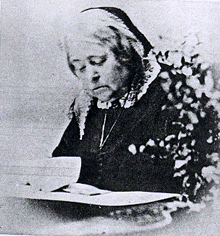
A huge outpouring of research and literature has been coming out on the importance of play and how it is essential to creativity, the arts and science, one's well being, and so forth.  From Richard Louv's (www.richardlouv.com) work on children playing in the woods and getting back in touch with nature to Mihaly Csikszentmihalyi's (http://www.cgu.edu/pages/4751.asp) older (but seminal) work on flow and creativity much ink has been spilled.  Yet even years ago, there were gifted trailblazers like Elizabeth Palmer Peabody who believed in the importance of play in the 19th century and based their life's work on it (my blog post for open source - http://opensource.com/education/13/8/open-education-ideals-peabody).

ps.  in case you're not familiar with her, Elizabeth Palmer Peabody was the sister-in-law of author Nathaniel Hawthorne and educator Horace Mann who often overshadowed her.  She was a gifted child and adult who became an author, bookseller, publisher, educator, a Transcendentalist, and a friend to the Ralph Waldo Emerson and the Alcott family.

Few things make my blood boil than seeing Elizabeth Palmer Peabody's original mission and concept of kindergarten go up in flames with standardized testing and worksheeting children to death.  Today, she must be rolling over in her grave.  Her whole life's calling of bringing Friedrich Frobel's (http://www.froebelweb.org/) original concept of kindergarten (or children's garden) seem gone.  Both Frobel and Peabody advocated that: 1) humans are creative beings and 2) play is the engine of real learning.  Both ideals seem naive and redundant with standardized testing.  And yet, Frobel and Peabody believed that play was not idle behavior but served biological purposes: to discover how things work and to help create meaning from their experiences.  

This might be shocking but Elizabeth Palmer Peabody (http://opensource.com/education/13/8/open-education-ideals-peabody) believed that each child should receive an education appropriate to their innate capabilities.  She believed in the intuitive nature of knowledge and that such knowledge had to be drawn out rather than imposed on children.  These were radical ideas in the 19th and some would continue to find them as radical ideas today.

What is particularly striking when you compare Frobel and Peabody's work on education (as well as the research and literature on the importance to play) and today's emphasis on standardized testing is how far they differ.  Standardized tests are convergent; so are IQ tests.  These involve solving well-defined, rational problems that have one correct answer.  Worksheets and the drill-and-kill approach are examples of convergent thinking.  For divergent thinking, by contrast, think Picasso, The Muppets or old school Sesame Street, the movie Hotel Transylvania, the Captain Underpants or Horrible Histories series, work by Richard Scarry or Roald Dahl - the 'way out there' stuff.


Then again, you might just read Mihaly Csikszentmihalyi's book, Creativity: Flow and the Psychology of Discovery and Invention (1996) (http://www.amazon.com/Creativity-Flow-Psychology-Discovery-Invention/dp/0060928204).  Though it's a bit dated, Csikszentmihalyi conducted a large-scale study on 91 creative individuals who became eminent in their fields including some Nobel Prize winners.  Ravi Shankar, Madeleine L'Engle, Freeman Dyson, Linus Pauling, Jonas Salk, Benjamin Spock, and many others were included in the study.  Many such creative individuals are now dead but they were true innovators and/or highly influential in their domain.

Csikszentmihalyi pioneered the field of creativity and flow and what he found is especially relevant for gifted parents and kids: 

1.  All creative individuals remained childlike for life.  The sense of wonder, the sense of play stayed.  The feeling of awe stayed too.  The intense curiosity never went away, even if one was 90 years old.  Please gifted parents, keep this point in mind!!!

2.  The parents of Ravi Shankar and others did not push their children to study.  The child's spontaneous interest led to the involvement.  IF the parents had pushed or been more directive, it's very likely that the child's interest would have flagged and then evaporated.
3.  Interestingly, school had very little effect.  Many in the study had no memory of a special relationship with a teacher.  Many, too, were not identified as being gifted in school and/or as children.
4.  There is no single way to teach a domain or a subject.  Instead, there are numerous ways to learn.  Intrinsic motivation and rewards were/are key to learning.
5.  New ideas, new discoveries, new ways of thinking, new patterns, new relationships come from mind wandering and doing what you love.  Filling out a worksheet isn't normally something a child loves, but is often busyness and not conducive to creativity.

Csikszentmihalyi looked at creativity across the life span and with gifted kids in his Davidson article (http://www.davidsongifted.org/db/Articles_id_10009.aspx) which parents might consider reading too.

More recently, Sir Ken Robinson (http://sirkenrobinson.com/) supports some of Csikszentmihalyi's ideas on creativity and goes further by saying schools are killing creativity.  He champions a radical rethink on educational systems across the globe to help nurture creativity in the digital age.   He doesn't believe we should keep the status quo or continue worksheeting children to death.  Instead, he values letting a child play, be curious and creative, make discoveries, and find their passion and calling in life.

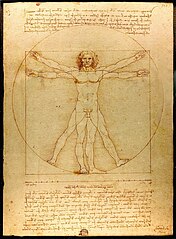
When we think about becoming a Picasso, a Leonardo da Vinci or a gifted@play, we might consider that to be a creative genius you often have to be at the crossroads of the arts and the sciences.  Great art and great science involve a leap of imagination and fantasy with a dose of reality.  You need the openness, passion, and rebelliousness of a mad artist or a Picasso and the playfulness, innocence, energy, and humbleness of a kindergartener.  And you don't need just one idea, you need many.  As Leonardo da Vinci's drawings and work remind us:  the sciences and the arts were not mutually exclusive to Renaissance humanists.  Leonardo's artistic work was as impressive and innovative as his studies in science and engineering.  Today, everyone seems to be leaping on the role and impact of science but neglect the role and impact of the arts in the process.

And yet what drives creative people like Leonardo da Vinci or Robert Ballard to the bottom of the ocean for the RMS Titanic, is curiosity and a burning desire to know.  They are truth seekers.  They want to know.  They want to find the answers to their questions.


Famed paleoanthropologist Maeve Leakey summed it best, "exploration is an obsession.  The more I discover, the more I want to know."  In 1999 Leakey made discovery in Lake Turkana, Kenya that completely changed the understanding of early human ancestry.  With her field and lab work, Maeve Leakey earned an international reputation in paleoanthropology, long a male-dominated speciality.  From an early age, she had been fascinated by animal life, collected insects, and explored tidal pools with the encouragement of her father.  She had planned to study marine zoology, but the 1960s there were no jobs open to women.  Instead, her curiosity was piqued by advertisement in The Times of London by renowned paleoanthropologist Louis Leakey looking for a young zoology graduate to work near him.  She was soon off to East Africa.  How her life would be so different if she didn't stay a kindergartener at heart.

Parents of gifted kids, please take heed.

This is a blog post for Hoagie's Gifted@Play blog hop.

Sunday, April 27, 2014

The Stickiness of the G-Word and the (2e) School Dance

The Stickiness of the G-Word and the (2e) School Dance


I don't know if you've ever dealt with the stickiness of the g-word and the (2e) school dance, but I have recently and it reminded me why it can be so awkward, difficult, and uncomfortable with a 2e child.  It's that moment when you tend to avert your eyes and want to disappear.

What am I exactly talking about here?  When I meet other parents at a playground or elsewhere, the discussion usually involves identifying our children and their current educational status: what school (public or private) they attend (or un/homeschool in our case).  Within minutes, there's often a discussion on the school, teachers, curriculum, and so on and how the child's current educational status is panning out.  I usually am on the receiving end of such discussions since I un/homeschool now and, as a result, have considerable flexibility and leeway with my son's education.

Usually, most parents (at least where I live) avoid using the G-word.  In fact, Massachusetts is one of two states that does not recognize giftedness.  There is no state mandate.  There is zero state funding for giftedness.  So the G-word is automatically a sticky word since the state doesn't acknowledge it and therefore doesn't set any definition, standards, or guidelines on it.

Only a handful of public schools in Massachusetts acknowledge the G-word.  Brookline Public Schools, for instance, concedes that there are gifted children, but they do not formally identify students as "gifted and talented" for placement in a separate program as it's considered part of the regular Brookline curriculum.  In Framingham, there is a classroom integration and pull-out enrichment program, but it very likely doesn't address all levels of giftedness or twice exceptional (2e) students well.  More significantly, however, in order for a child to enter such program, they usually have to qualify for one.

Though other states acknowledge the G-Word, they usually make their own definition, standards, and guidelines for students to meet.  On this point, Scott Barry Kaufman wrote an excellent article on who is currently identified as gifted in United States (http://www.creativitypost.com/education/who_is_currently_identified_as_gifted_in_the_united_states).

Standardized tests and IQ, unfortunately, remain supreme in identifying giftedness.  When we were living in New York City, the gifted and talented test included the OLSAT and Bracken Readiness tests.
Truth be told, before we moved (back) to MA and we were living in New York City, my son took the gifted and talented test at age 4 and did not qualify for the program.  He was a special needs student then in an integrated pre-kindergarten student at a publicly funded school.  The gifted and talented test was free and, at that point, I was heading to arbitration with the NYC Board of Education concerning my son's future educational placement for kindergarten.  I had a hunch (ok, really more than a hunch) that he was a special needs child who was gifted or twice exceptional (2e) and it was going to be a serious challenge to find an appropriate school for him.  We'd looked at special needs schools, such as Churchill, Gillen Brewer, and others but it looked bleak and this was partly why we moved back to Massachusetts: for our son's education, though we didn't bargain on it involving the G-word at the time.

When we moved back to Massachusetts from New York City shortly after the gifted and talented test, my son was a special needs student in a pre-kindergarten program in a public school and was not identified as a gifted or as being twice exceptional.  As a special needs student, our son was tested at grade level on cognitive tests by the public school.  The public school wanted to keep our son in the special needs for another year of pre-kindergarten because as I mentioned most children with late birthdays are redshirted and because he was exhibiting ADHD-like and PDD-like symptoms.  But we had signs at home that our son needed a gifted education.

 In Massachusetts, private schools have largely shoulder the gifted population; Hoagies' Gifted page is a great resource to find such schools (http://www.hoagiesgifted.org/schools.htm).  With my son, we were very fortunate that my parents paid for him to attend two of the schools listed here.  But we were less fortunate that neither school could accommodate my son and herein lies more stickiness with the G-word.

We actually did not know how gifted our son was until we had placed him in the first private gifted school listed on Hoagies' Gifted page for the remainder of pre-kindergarten.  Many parents don't know how gifted their child is until they are put in such an environmental setting (private gifted school or equivalent) and presented with a 'gifted education.'  You just don't always know how a child, especially a young child, is going to respond or react.  Five-year-olds can be unpredictable!  Needless to say, we were quite surprised when the first private gifted school informed us that they could not longer accommodate our son because he accelerated too quickly.  Great.

What's not widely acknowledge within the gifted world, or general population at large, is that there is no effective one-size-fits-all mode of education.  First, only a miniscule scattering of schools across the country can address the needs of extreme giftedness or twice exceptional kids like my son (http://asynchronousscholars.org/2011/08/why-is-it-so-hard-to-find-schools-for-profoundly-gifted-kids/).  And second, (private or public) schools, by their nature, are designed to met a hypothetical average based on a neurotypical developing child for each grade and subject.  My son was at a loss on both counts.

Schools are not based on outliers.  On a large scale, such as with the public school system, it's inefficient and perhaps impossible to create curricula tailored to meet the individual needs of each student.  On a small scale, it's perhaps possible to create curricula but then there are other variables that are often forgotten in the mix which a gifted or twice exceptional parent has to contend with: what the curricula actually entails, the way the curricula is presented (ie. linear and sequential?), the special needs, the other students, and on and on.  So many of these variables are not in a parent or child's control.  Public or private schools may work great if your child matches the school's curriculum or is willing to tolerate it, but it's less than satisfactory if your child comes home from school with stomachaches, headaches, depression, or other complaints of psychosomatic symptoms each day.

Worse, our current educational system and focus on standardized tests does little to nothing to foster passion, creativity, or what interests children as Scott Barry Kaufman and others have said (http://92yondemand.org/the-genius-debate-identifying-the-origins-of-genius/).  And yet, what children learn best is what interests them, what they want and need to know at a particular point and time.  Gifted, twice exceptional or not.  But that's not how most schools operate.  Though public and private curricula varies, there's still usually a developmental sequence of skills that's adhered -- addition and subtraction precede multiplication and division, for instance.  There's still usually a teacher who leads or directs the instruction of educational material on what they students should learn.  And while many private gifted schools are willing to accelerate a child ahead a couple of grades or more, they're less willing to accelerate a child five grades or more across every subject or even delve far and wide in a particular 'esoteric' subject as a child may like.

What's a gifted or 2e parent to do?  Well, if you live in MA, you might try the public or private schools before un/homeschooling or you might just cut the chase.

Here it is!  The long-awaited logo for the Hoagies’ Gifted Education Page Blog Hop for May 2014!


cid:CB0A429C-BF57-4632-92E5-EA77310A681AThis blog is part of the Hoagies’ Gifted Education Page inaugural Blog Hop on The “G” Word (“Gifted”).  To read more blogs in this hop, visit this Blog Hop at www.hoagiesgifted.org/blog_hop_the_g_word.htm


Saturday, April 19, 2014

Steps for dealing with anxiety, feelings/emotions, and your 2e child

This is part of part of Gifted Homeschoolers Forum third blog hop of the year - Promoting Health and Wellness in the Gifted/2E Child

(http://giftedhomeschoolers.org/blog-hops/promoting-health-wellness-gifted-2e-child/)

Disclaimer: I am a parent of a 2e son; I don't have a medical or psychology degree or anything remotely connected to it unless a history or library degree counts.  However, I have dealt with anxiety on my own and lately with my 8-yr-old 2e son.  I was also raised by parents were emotionally challenged and never entirely understood.  My 2e father and sister are on the Autism Spectrum and, as a result, still have a very difficult time expressing their feelings and emotions to me or anyone.  So I say: ignore addressing emotions to your peril.

A lot of this blog covers dialogues, interactions, ways to talk to and listen to your children.  If you're familiar with the book, How to Talk So Kids Will Listen & Listen So Kids Will Talk then you'll get it. If you're not familiar with the book and need some guidance, then you might pick up a copy at your local library or elsewhere.

1.  Anxiety.  The first step is the hardest and wouldn't classify as the simple part, I think.  You, dear parent, have to come to grips with your own anxiety and perfectionism.  You have to deal with your own dirty laundry and garbage, which most people consciously want to avoid!  There's cognitive behavioral therapy.  There are books, such as David Burns's The Feeling Good Handbook (http://feelinggood.com/) or Edmund Bourne's The Anxiety & Phobia Handbook (http://www.helpforanxiety.com/about_dr_Bourne.html).

We live in anxious times.  There are tiger parents, helicopter parents, and so forth who seem to circle like anxiety vultures and usually only too eager to impart unwelcomed comments, suggestions, and advice.  Then, there's the lackluster (or toilet) economy.  It's feast or famine with jobs, it seems.  Some pay but require ungodly hours and devotion.  Others, well, don't pay.  Medical benefits are great if they're included with employment, but it's a frigging nightmare if you've got none or close to none with any you may have.  Generally speaking, the 'traditional' route to improving one's socioeconomic standards (ie. hard work and high achievement in a high performing, test happy school) is no longer a guarantee of future employment or material success.  What's an anxious parent to do, but worry?

a)  Anxiety/wellness - symptoms, sleep, diet, and exercise - I'm not forgetting!!!  I'll just leave that for another blog/s or for someone else at the moment.  There's enough here.

2.  Identify feelings.  If you accept the reality that we live in anxious times, how does that make you feel?  Glad, mad, or sad?  IF your child has a meltdown, does it make you feel glad, mad, or sad?  Or how does a meltdown make your child feel - glad, mad, sad, or bad?  Today, there are plenty of prompts, books and ways to help your 2e child identify their feelings.  Help your child.  A smiley face is a visual example of happiness or being glad :).  A red piece of paper may indicate a child is mad!

3.  Validate feelings.  Yes, I can blow my top when my son has a meltdown.  Put a check in the mad column.  When my son has a meltdown, he doesn't make him feel too good about himself either.  Put a check in the sad and bad columns for him.  Let's think about this for a minute.  A meltdown doesn't make you feel good.  I don't like getting mad.  I don't like seeing my son get sad or feel bad about himself.  Still, it happens.  And a child needs to know that these feelings are normal to have.  They're going to come and go.   Today there are cards, games, songs, and numerous ways for kids to validate their feelings if they're having trouble articulating or expressing them.

4.  Share/express feelings.  Try putting your feelings into words, drawings, or music.  For a younger child or one is struggles verbally, even a simple gesture such as thumbs up or down can go a long way to help a child share how they're feeling.  Or perhaps a particular song captures the words and feelings for a child that they're unable to articulate.  IF a particular song seems to work, try to found why.  The point here is to identify your feelings, validate them, and then consciously express them to yourself and/or others as possible.  Easier said than done.  Most of us don't really want to connect to our inner feelings and thoughts.  And you get forget about feeling like you're getting naked and revealing your innermost being.  Yet we expect kids to do this without some help and not wobble.  

a) If you've got a persistent case or feel the potential for one, you might find a chart for dysfunctional thoughts or decide to make a daily record of them.

(http://thebookshare.blogspot.com/2007/09/how-to-use-daily-record-of.html)

5.  Too negative feelings + too negative thoughts = (doo doo).  Too much (doo doo) and well, we know the results.  You do NOT feel good about yourself.  You feel like doo doo.  Too much of that and you'll topple and spin out of control.  I don't think anyone likes feeling out of control.  The trick here is recognizing how to avert that toppling and point where you're about to go over the edge.  A two-year-old isn't capable of doing that and it's debatable how many eight-year-olds like my 2e son are either.  Let's get real here.  Many adults struggle with this too.

a) Scale.  A good way to tackle the onslaught of negative feelings and/or overreactions is to have a 5-point or 10-point rating system.  If you spill milk on the kitchen table, that may be a one or a .5.  Yes, I don't like spilling my dairy-free milk or cleaning up the mess either, but it's really minor in the grand scale of things and doesn't warrant a 5 response (though a child may feel like it does).  

Here, it's worth bearing in mind that many actions and decisions in life are reversible.  Most things are not etched in stone.  Even when things are etched in stone or irreversible, such as death, we can learn to cope with it as best we can.

b) IF a child's emotional needs are not being met and you're concerned about depression, don't hesitate to consult or see a professional.  Everyone has the blues and down days but too much negative feelings and thoughts can veer into depression and be a real cause for concern with 2e kids.  Children who are unable to express their feelings may externalize them with emotional eating, for example, when they're depressed or self-mutilation.  Marianne Kuzujanakis has a great SENG article about this topic and I'm very grateful to her for it because I was able to identify psychosomatic symptoms with my son when he was in a private gifted school and his needs were not being met.  I'm now un/homeschooling and the psychosomatic symptoms have disappeared.

SENG article - (https://www.sengifted.org/archives/articles/where-does-a-pediatric-doctor-fit-in-the-care-of-gifted-children).

6. Reframe the distorted negative thoughts.  Instead of the negative what ifs and catastrophizing, it's a case of I'll learn how; I can do it; I'll do my best.  Counter the negative self thoughts with positive ones.

7.  Good feelings + good thoughts = calmness.  Of course, we, as adults, know that lemons can be made into lemonade.  We can turn a negative feeling or thought into a positive or see a bright side.  Many 2e children, however, struggle with this because their imaginations can run wild and they can dreamt up every unlikely possibility it seems.  

8.  Calmness.  If you're calm, you're less anxious.  As adults, we usually know how to calm ourselves down.  We take a walk, go for a run, ride a bike, rake, or do some physical exercise. We might bake, draw, squeeze a ball, or do something with our hands.  We might listen to music so we keep the peace in our heads.  We might watch a video or go into our bedroom/bathroom and close the door so we don't have to (physically) look at our child for a few minutes.  We might self-talk to ourselves.  We might do some heavy breathing for a few minutes.  We might lie down somewhere and close our eyes.  

A child doesn't necessarily know these calming tricks or is aware of them.  Or they just haven't reached the self-help and social/emotional milestones and developments.  Other times, it's harder due to exceptionalities.  So, with some 2e kids (and my son has been one of them), they can quickly wind themselves up but have no idea how to unwind themselves or how to stay on a more even emotional keel.  

A 2e child can be INTENSE.  Some 2e kids are super sensitive, emotional, overexcitable, and lack those internal switches or wiring to keep themselves calm.  I know.  I do know from experience.  Weighted blankets, Epsom bath salts, fidgety toys, trampolines, and many other do-dads I'll call them can help to calm 2e kids.  Keep experimenting until your child finds their inner peace and calm.  Sensory integration disorder books can provide guidance on helping to calm a child.  Occupational therapists who have training and experience with 2e kids or sensory integration can help too.  My son was born with severe sensory processing disorder and spent five years in occupational therapy, including three years in a sensory gym.  

As difficult as it is at times, try to view these emotional sensitivities and overexcitabilites as assets rather than as (negative) deficits.  I know, I can see the eye rolling now.  But let's put this in perspective.

Can we name any adults who are emotional sensitive and overexcitable and yet have done wonderful things in life?  I'll start (in no particular order here): Roald Dahl, Dav Pilkey (author of Captain Underpants), chef Gordon Ramsay, Steven Spielberg, Elton John, John Lennon - for the boys; Jane Goodall, Mary Leakey (paleoanthropologist), chef Rachel Ray, Grace Lin (writer), Tina Fey (humorist), Geena Davis (actress) - for the girls.  I'm sure you can come up with a list too.


Half the battle here with a 2e child is getting them to recognize their feelings and when they're getting anxious.
  

http://giftedhomeschoolers.org/blog-hops/promoting-health-wellness-gifted-2e-child/
This post is part of the Gifted Homeschoolers Forum third blog hop of the year - Promoting Health and Wellness in the Gifted/2E Child  (blog hop). http://giftedhomeschoolers.org/blogs/blog-hop/

Friday, February 14, 2014

Six Ways to Stay Motivated Un/Homeschooling With a 2e and Not Totally Lose It

How to Stay Motivated Un/Homeschooling with a 2e and Not Totally Lose It

1.  Cost-benefit analysis or reality check.  I do this nearly every day.  I remind myself the reasons why I'm un/homeschooling:  I've run out of alternative options.  I did not initially set out to un/homeschool my son.  I am un/homeschooling by default.  This is a least-worst case scenario situation.  My son's been in public schools and private schools.  That's it.

IF my son were in school (private or public), he would be considered an underachiever or lazy.  He is intrinsically motivated, not externally motivated by rewards and punishments.  He is a divergent, independent thinker.  He is a leader and definitely not a follower.  He doesn't think linearly or always follow directions.  He finds his own solutions and makes his own theories up.

With un/homeschooling, I can cater to his visual spatial strengths (http://visualspatial.org/spatialstrengths.php) and concentrate on the positives.  He can be wildly creative.  He can break the mold and work in unconventional ways.  He can be beat to a different drum and not be penalized.  The fiery fluctuations in mood, sensory overloads, and restrictive diet are not going away but they can be managed more effectively or at least that's the goal.  I don't have to contend with the psychosomatic conditions (headaches, sleepless nights, depression) associated with an educational misfit either.

Schools, by their nature, are designed to shepherd students into schools of thought and into rote-based, sequential work.  They're designed to provide structure and order.  They're not designed for solitary thinkers or rebels.  They're not designed to deal with  flashes of more intuitive, irrational thought.  Except for perhaps some, schools are not designed with highly spatial, creative abilities in mind; they're designed for kids who think in words, not in images.  Moreover, emotionally sensitive and high strung kids are usually viewed as problems rather than assets at schools.

NOTE:  I'm not trying to beat up on schools or teachers.  I taught history as an adjunct instructor at a community college and state college as well as briefly at a public high school.  I'm just speaking from experience here and talking about the reality of public education in general.


2.  Define terms yourself.  How do you define your child?  Do you try to turn what's often seen as negative traits into positive traits?  If not, I would encourage you do so.  Help your child view themselves in positive terms with un/homeschooling.

With the vast majority of schools (either public or private), the child is expected to fit and adhere to the curriculum rather than the other way around.  Schools, policymakers, or a school committee make the decision on what books children read, what curriculum to use and follow, what the frameworks or objectives are for each subject in each grade, and how much and what types of technology are used in the classroom.  Choice?  Not much.  With un/homeschooling, it's the opposite situation.

The beauty about un/homeschooling with a 2e child is that you can create a curriculum (or free yourself from one) and environment that caters to them.  You have a lot of latitude.  If your child is a visual spatial learner, you are free to watch Ted Talk videos, for instance.  If your child balks with rote-based learning, you can switch to more project-based learning or go unschooling instead.  The world is your oyster.  So if halfway through the year, you find yourself in a grind:  Change course.  Take a break.  Try something else.  Don't bang your head.

What is the definition of gifted or un/homeschooling?  It's not as straightforward as you think.  Some people can get hung up on the differences or ranges within the un/homeschooling world.  To me, that's not important.  To me, what's important is taking care of my son to the best of my ability that I can.  That's my priority.  

3.  Define or redefine routine or plan.  I have basically been scheduling or planning my life, and thus my son's education, around various therapies and appointments.  That's one of the reasons why I laughed at the question of how to stay motivated with homeschooling: treating my son's special needs is partly my motivation.  It's a maternal drive thing.

Oh, yea, I have more academic plans and expectations of my son with un/homeschooling.  I do expect him to a read at least every day, maybe 15-30 minutes tops, on a mutually agreed upon book.  I don't think this is arduous or an unrealistic expectation.  Most days my son cooperates.  Some days he does not.  He's got other plans.

Do I wobble or panic about my son not cooperating with reading or doing more 'schoolwork'?  No.  I say to myself: eventually he will take responsibility for his own learning and become more self-directed.  Give him time.  Give yourself a break.  Don't bang your head.


4.  Think in terms of development and keep notes.  Every time I think I'm not doing enough or somehow failing my child with un/homeschooling him, I remind myself of the gains he's made since September.  I keep some track of what he reads and writes.  I keep some track of any educational videos or games he watches, for instance. I keep some track of what he's doing for English, math, science, history, art, and music for myself and the local school department.  I try to keep some track of this information in a wiki.  It helps to look back at these lists (or quick mental lists) when I'm feeling blue, feeling anxious, or incompetent.

Every time I have a panic attack on my son's social/emotional development with un/homeschooling, I run through the list - which the public schools tend to ignore.  My son's not suicidal.  He's not depressed.  He has some down days, but those don't stack up like chips anymore.  He doesn't have to deal with bullies at school.  He sleeps!  He's not waking up in the middle of the night either.  He doesn't have stomachaches or headaches.  He can take recess any time and go to the bathroom any time and without a permission slip.  He doesn't have to deal with fire drills or loud announcements.  Most importantly, he's usually happy.  He often skips or dances around the house if he's particularly happy.  And that's what really makes un/homeschooling worthwhile.  To see that utter joy and contentment that spills out of one tiny little body.  It's bliss.  Sorry, but screw the academics!  What's more important?


5.  Survey Technique.  Sometimes I do a quick stock take.  In other words, I ask myself are people going to judge my son based on whether he is un/homeschooled or whether he is a kind, caring, and compassionate person.  I remind myself that the latter should be the case (hopefully) and that who cares when he's twenty-five years old whether he's been un/homeschooled.  I also remind myself how many famous people have been un/homeschooled (or should have been!) - a laundry list here.


6.  Take care of yourself.  I have to take care of myself and be careful not to burn out or get overwhelmed or frustrated too much.  Exercise.  Journal.  Join a support group.  Meet other un/homeschoolers.  Take breaks.  Find creative outlets.  Find how to restore your inner peace and calmness.  Learn new things.  Explore.  Discover.  Dream.  Don't doubt yourself or your abilities.  Don't bang your head against a wall.  Forgive yourself for raising your voice or tearing your hair out. Remind yourself that you are human and make mistakes.  Protect your sanity!!!

This post is part of the Gifted Homeschoolers Forum first blog hop of the year - Staying Motivated throughout the Homeschool Year
 (blog hop).

http://giftedhomeschoolers.org/blog-hops/staying-motivated-year-homeschooling/

blog-hop-feb-2014

Wednesday, February 5, 2014

How Breakfast With the Beatles Helps Restore My Sanity

How Breakfast With the Beatles Helps Restore My Sanity


Every Sunday, or nearly, we eat breakfast while listening to the radio program: Breakfast With the Beatles on Boston's 100.7 WZLX (http://wzlx.cbslocal.com/show/breakfast-with-the-beatles/) and it helps restore my sanity.  That may seem dumb, but it's not to me.  Each week I look forward to this show: the music and the fascinating tidbits of information that are imparted by the local deejay.

This may sound corny, but I feel like Breakfast With the Beatles enables me to metaphysically travel to another place, time, and space.  It's a radio program.  How many people today actually sit down in the house and listen to an hour-long radio program?  Well, we do.  And we do it every week.  What's more, I didn't grow up with the Beatles and neither did my husband.  We weren't even fans of the Beatles growing up.  

Breakfast With the Beatles takes me to a time when life wasn't so frenetic or at least didn't seem so.  It takes me back to images of my grandparents growing up during the Depression and listening to radio programs.  It takes me back to a time when there was less technology in people's daily lives.  It takes me back to England, my husband's homeland, and to Lancashire, my ancestral roots, and the irresistible Scouse accent.  It puts me in a different frame of mind, even if it's only temporary.  I can daydream.  I can pretend.  Or perhaps fool myself into thinking I'm 'normal' and part of a majority.

On Sunday morning, we don't try to hurry about or at least not for an hour or so.  We (ie. husband, son, and me) sit down and eat egg-banana pancakes (two eggs, one banana) or scrambled eggs and homemade sausages.  We try to eat leisurely.  We try to focus on the moment and the positive; not on the negative or what needs to be or to get done.  We forget about the specialists, the therapies, the various appointments, what our son is or is not doing or is supposed to be doing, and everything else that seems to consume our lives during the week.  We take a time out.  We just let it be.

February 9, 2014 marks the 50th anniversary of the first appearance of the Beatles on the Ed Sullivan Show.  Neither my husband or I watched the show then.  We weren't even born yet, though my husband's sister was.  An estimated 73 million Americans tuned in, the largest ever for a TV show at the time.

Today, we don't even have a television in our house.  We got rid of our television.  So it's not possible to watch such a program unless it's online.  Ok, so 98% of Americans still own and watch television (http://stateofthemedia.org/2012/audio-how-far-will-digital-go/audio-by-the-numbers/).  I don't care if I'm in the 2%.  In fact, I relish it!!

Television is an old form of technology and a mass television audience, in time, will be a thing of the past.  Television may distribute ideas or information through visual means, but that content is often questionable.  Radio is, of course, an even older means of obtaining information, but that audio content is still governed by the FCC (Federal Communications Commission - http://www.fcc.gov/encyclopedia/faqs-radio), for the time being, and therefore there are limits on what can be transmitted.  This may make me sound prudish (which I'm not) until you think about the salty language that the Beatles often used, though usually avoided in press interviews.

My son will still grow up with radio and listening to rock and roll, but not with a television in his house.  Perhaps it's that metaphysical connection to the past and to an older, more simpler form of technology with radio which pulls me to a listening to Breakfast With the Beatles each Sunday morning.  Perhaps it's the fact that millions, if not billions, of people can relate to the Beatles or to the music and this is an easy way for kids like my son to make small talk and feel like being a 'normal' member of a larger society.  

Music has a way that crosses geographical or generational lines.  It has a way of tapping both sides of the brain and bringing emotions to the fore.  It's hard not to get sentimental when you sing "Good Night" and learn that John Lennon originally wrote the song as a lullaby for his 5-yr-old son Julian (who was also musically gifted) as his first marriage was falling apart.  Music has a way of capturing the heartstrings that words do not.  It has tremendous power over memory.  It had a way of reaching my grandmother when she had dementia in the nursing home.  My grandmother's ability to recall old Scottish tunes, which the family had never heard previously, and start singing them bridged an emotional gap.  That music enabled us to make an emotional connection with my grandmother and see beyond the dementia that no words could do.

Music by the Fab Four seems to go a few steps further than just crossing geographical and generational lines.  It is timeless.  The profound legacy of The Beatles cannot be underestimated.  Not only did they inspire and define a generation, they inspired many future generations as well.  Many musicians today can trace their musical interest and roots to the Beatles.

John Lennon, in particular, holds a special place in people's hearts and minds, including us.  Our son seems to embody him.  Lennon was twice exceptional:  being creatively gifted and having visual impairments like my son (though so far my son doesn't have the musical gifts).  Lennon was the 'lazy' one, an underachiever in school.  He was the rebellious one.   He had vision, intellect, angst, and eccentricity wrapped up in one.  He didn't want to keep practicing to be perfect like Paul McCartney did.  He wasn't meticulous, organized, or disciplined like McCartney either.  If he wasn't inspired or under pressure from producer George Martin, he often didn't bother to sit down to write a song.  But when he did, oh my, what creative masterpieces.

Of the four Beatles, Lennon was the leader and the one who wore his emotions on his sleeve.  He was the artist.  He was the one who did things to extremes.  I try not to dwell on his addictions, his wild side, or how his relationship with his first wife Cynthia Lennon and Julian soured after he married Yoko because it hurts.  The man had warts.  He drove people crazy.  Still, I can relate.  He seems, well, so human and not some mythical figure to me.  And frighteningly reminds me of my son's traits and tendencies.

How four creative, musically gifted lads of Liverpool formed one of the greatest bands in history is truly a story to tell and share.  If your child hears the details of the struggles of Fab Four's upbringing as individuals and then as an emerging band, perhaps your child will feel less alone.  There really are people who come from the Dingle (inner-city working class neighborhood in Liverpool where Ringo was raised) and council (government) housing who made it to the upper echelons of society and to the big time.  Out there, some place, some time, there have been others like them who forged ahead -- even when the chips were stacked against them and their future success and life was anything but inevitable, not by a long shot.  And maybe that's it about The Beatles: it's the story.  As Pete Seeger (who recently died) once said, "the key to the future of the world is finding the optimistic stories and letting them be known."