Friday, February 6, 2015

The Last Journey of a Genius and How Do You Say Gifted?

The Last Journey of a Genius and How Do You Say Gifted?


In 1989 PBS' NOVA aired The Last Journey of a Genius, a television documentary on the final days of the great physicist Richard Feynman.  Today, anyone can google and watch it. 


In the documentary, Richard Feynman talks about becoming a member of the Arista, an honor society, at Far Rockaway High School in New York City.  At the time (early 1930s), everyone wanted to be a member of the Arista, according to Feynman.  However, once Feynman became selected he soon discovered that the group was more concerned about deciding who was to be allowed in the Arista.  He hated intellectual pretense and wanted no part of it.


Feynman wanted to be ordinary: a school psychologist had tested his IQ at 123/5 in the 1930s or within the range of normal.  Feynman once told a friend that he would not be able to join Mensa, an organization who members have IQs in the 150 or higher, since he lacked a high enough qualifying score.


Apart from his IQ score, Richard Feynman was anything but ordinary.  While Feynman's name is often touted about within the physics world, Einstein's iconic status extends far beyond the physics world and the one most commonly named in terms of giftedness.  And yet, most (who are knowledgeable about Feynman and Einstein or other geniuses) would put Feynman in the category of giftedness and even the rarified category of' true' genius.
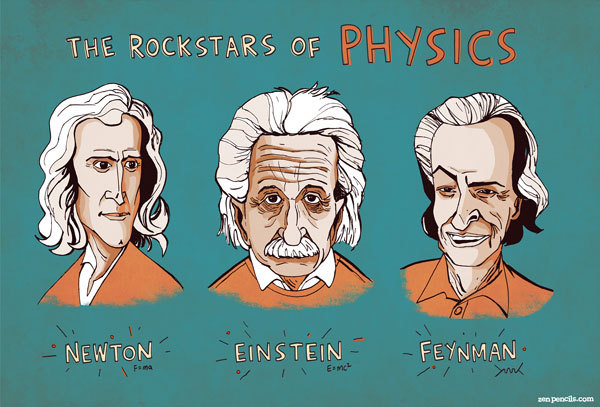

The similarities between Richard Feynman and Albert Einstein are staggering and worth noting:
both became famous, award-winning physicists.  Both were awarded Nobel Prizes.  Both looked for the simplest solution to a problem.


Both Feynman and Einstein beat to a different drum.  Both were late talkers and not always hard working, high achieving students.  Both had an insatiable curiosity and were highly creative.  Both were divergent rather than convergent thinkers.  Both cherished the process of exploring and investigating questions rather than the end result.  Both were physically and socially awkward.  Both had married and then divorced; though Feynman's first wife died of tuberculosis and he stayed married to his third wife for more than twenty-five years.


Ironically, today the term 'little Einstein' has been co-opted.  Too often, it is usually refers to a bright, eager child with a high IQ who perhaps learns how to read at or before age 2 and then performs other amazing physical and cognitive feats at an early.  Quite the opposite of Einstein's own upbringing in many ways, yet the pundits and talking heads persist in co-opting his name.  The title of the headline Little Einstein! Girl, 3, Mensa's Youngest Member says it all.  


Today such 'little Einsteins' are never considered 'little Feynmans.'  Often, there's no discussion how giftedness may be more than a high IQ or a qualifying score with Mensa or pertain to a set of characteristics and neurological condition.  There's also usually nothing about how Einstein or other gifted people do not share the same precocious or physical, mental, social and emotional developments and, in fact, many gifted people have special needs and developmental delays.  And there's often no discussion or consideration how much a disservice this association does for the betterment of society or the child either.


Intelligence scores speak for one piece of the puzzle, but they do not speak for all.  Otherwise, Feynman and many others would have a higher IQ score than they did or do.


Perhaps we should re-assess how we say giftedness.  Perhaps we should accept that there are Feynmans in the world and that there are more definitions and ways to be gifted than being identified through IQ testing.


This is part of the Gifted Homeschooling Forum's blog hop How Do You Say Giftedness.  For more of GHF's blog hops, see http://giftedhomeschoolers.org/blogs/.


http://giftedhomeschoolers.org/


Sunday, December 14, 2014

Hawaiian Punch, Junk Food, and a (Holiday) Food Plan

Hawaiian Punch, Junk Food, and a (Holiday) Food Plan


The holidays:  a time when Michael Pollan's simple advice "Eat food.  Not too much.  Mostly plants " seems to go out the window.  Beets, cabbage, and other root vegetables are staple foods for countless peasants around the world.  Yet on a global scale, a treat or something sweet is usually presented during the holidays.  Special cookies, cakes, candy, and other dishes are often made.


Until fairly recently, these special treats were not available year round.  Until fairly recently, sugar was not ubiquitous.  And until fairly recently, processed foods, artificial food dyes and colorings, artificial and refined sweeteners were not so widespread either.  Today, it's the wild west with foods.

For many parents of 2e children with allergies, food sensitivities, or on restrictive diets, the holidays are somewhat of a nightmare.  For many, however, the food issues are year-round.  During the holidays, they just become magnified about 100 times, it seems.   The sights and smells can be hard to resist.  Food quickly becomes associated with fun but isn't when your child can't eat certain food or when you've become a member of the food police or healthy food advocate.

Every holiday event seems to have tons of junk food, sweets, and other unhealthy items (cakes, cupcakes, cookies, etc.).  What can a 2e parent do?  

1.  Acknowledgement.  'Food' features strongly in holiday celebrations.  Though we may disagree on what you or I may constitute as 'food', it's pretty much a given that many people feel compelled to bring a 'food' item to a holiday event or gathering.

2.  Document.  One British family did an experiment.  They created a food diary and logged their kids' daily sugar intake for a week.  The parents were horrified.  It turns out the kids were eating 70 teaspoons of sugar a day!  Worse, much of the sugar intake was consumed at public (state) school.  And such sugar was not presented as one-off treats either.

3.  Don't forget about drinks.  Visit Whole Foods or many other supermarkets during the holidays.  Eggnog and other holiday drinks are often freely available.  Many schools, libraries, and other organizations serve Hawaiian Punch or other 'kid-friendly' drinks during the holidays too.  Yet these drinks are usually contain artificial food dyes or colorings as well as sugar.  Robert Lustig, NPR, and other organizations have written about the hidden sugars and substances in juices.

4.  Plan ahead.

Option A.  Don't attend or try to avoid holiday celebrations.  Elimination works, but isn't always doable or realistic.

Option B.  Eat before any holiday celebration.  That way the temptation to eat is gone or reduced.  This is sometimes works.  For many kids, they see others eating colorful creations and they are desperate to join them regardless.

Option C.  Bring an alternative holiday celebration.  Your child wants to attend a holiday celebration that will have brownies, for instance, but your child can't or isn't supposed to eat brownies.  Your child, however, can (discretely) bring homemade brownies.  You found a recipe for chocolate avocado cookies which look like the real McCoy and your child can and, more importantly, does eat them.


Option D.  Let things go and let your child eat whatever at a holiday celebration.  This is like the hope and pray that no harm will come.  Again, this may work or might not work - at all.  IF your child has a severe allergy, then the harsh reality is that can't always control what others bring and your ability to protect your child from any harm comes first, period.

Option E.  Something I haven't covered?  Maybe an exit strategy when things go south at a holiday event?

5.  Allow your child to have a role and devise a solution.  Let's say you've got a child on the GAPS (gut and psychology syndrome) diet.  You can could be a food enforcer.  Or you could ask the child to help play a larger role in their food decisions and choices.  Let your son look at Pinterest for recipes.  Let them pick out recipe.  Let them find something to eat that they will like and eat.  Let them be part of the solution, if possible.

6.  Talk about the social and emotion feelings.  Everyone likes to feel included, but 'food' can be a thorny issue today and for many of us.  Some kids have a physical reaction to food and that's no fun.  Some kids have a behavioral/neurological reaction to food and that's no fun either.  Many people don't genuinely understand why a child can't just have a little bit of candy or a little bit of Hawaiian Punch to feel part of a group.  Not many parents want to be a pariah over food either.

Not surprisingly, parents and kids often feel the peer pressure with food.  It doesn't make you feel good when others can supposedly guzzle Sunny Delight, for instance, or pop gingerbread cookies into their mouths without any ramifications, it seems.  Yes, it's not fair.  Yes, it seems out of your control.  Yes, it seems like you have faulty or defective genes when others do not.  And yes, it's not an easy path.

I 'get' it.  My husband has Crohn's and yes, recent research has pointed the figure at the Neanderthal gene for causing it.  Moreover three years ago, our 2e son was put on a restrictive diet by a neurofeedback provider - a sort of GAPS/Wahls/Paleo/Feinstein (no grains, dairy, corn, soy, processed food, refined sugars and limits on fruit, yada yada).   Initially, it was a nightmare and daily juggling act.  Yes, food can be a daily grind.  It's not like trying to skip rope which you can avoid on a daily level.

With peer pressure and food, brainstorm the alternatives and options available.  Sometimes you can easily substitute.  Other times creativity is necessary.

7.  Positive reinforcement for healthy food choices and decisions.  Praise the child for taking the time and effort to select a recipe.  Praise the child for taking an active role and making a decision.  

8.  Become a healthy food role model.  Practice what you preach.  Read the labels and find out what the ingredients are.  When a neurofeedback provider put my son on the restrictive diet, I went through my refrigerator and cupboards and either donated food to charity or chucked it out (note: we didn't have a compost bin then!).  I set aside most of my cookbooks.  I googled and googled and googled for recipes.  Now I find recipes on Pinterest instead.  I found healthy substitutions.  In many cases, however, I had to flip our meals and ways of thinking and eating.  But my husband and I both made the conscious decision to become food role models for our 2e son.

9.  Become a healthy food advocate.  When the public library served Hawaiian punch (and junk food) at a children's library event, my 2e son spoke to the children's librarian and suggested that perhaps they could offer something healthier.  Raisins are often served now; previously they had served oreo cookies.

10.  Enjoy the holidays - or at least try to enjoy the holidays.

This is part of the Gifted Homeschooling Forum's blog hop Parenting OEs, 2Es, and Everything in Between http://giftedhomeschoolers.org/blog-hops/parenting-oes-2es/.  For more of GHF's blog hops, see http://giftedhomeschoolers.org/blogs/


http://giftedhomeschoolers.org/

Friday, November 28, 2014

Ten Ways on How to Avoid the Buy, Buy, Buy...

Ten Ways on How to Avoid the Buy, Buy, Buy...

Today is Black Friday (Nov. 28, 2014 - the day after Thanksgiving in the US).  It's also notorious for the herd mentality buy, buy, buy day where people are trampled on for latest televisions, computers, and toys.  To me, it's depressing.  

This morning, a BBC article, 'Black Friday': Police Called to Supermarket Crowds, was a bleak read for me.  This day and concept has now spread to the UK (where my husband is from, where I have lived, and my in-laws still live).

So how best to avoid this unfettered materialism run amok??  How to avoid that herd mentality?  How to avoid the emotional tugs of needing the latest and greatest?  

Since the spring/summer, I have been doing much research and reading about zero waste and refining my purge and resistance techniques.  I think I've come up with some ideas.  

1.  Avoid as much media advertisement as possible.  This is easier said than done.  Even in dentist or doctor waiting rooms, there's usually magazines, such as People or Family Fun, with pages chockfull of holiday ads. 

2.  If possible, limit or ban television.  We've been television-free for a little over a year now.  We don't regret it for a second.  My son watches videos online and can successfully avoid being a captive advertiser's victim.  

3.  AVOID shopping malls and big-box retail shops as much as humanly possible (preferably at all times, not just the holidays).  If you actually need to buy some socks for your child/ren, then try to shop when you're pressed for time in one retail store, such as Target, and not subject yourself to impulse buying.  Browse in a library NOT with retail therapy.

4.  Consider shopping at charity, thrift or consignment stores instead of hitting the mall.  If you shop at a charity or thrift store, it's often a double win situation where you and the charity benefits.  You help others and the environment when you shop at charity and thrift stores, as well as your wallet.

5.  Donate to charity.  Clean out the cupboards.  Remove the 'junk' from your home.  Simplify your home and lifestyle.  You'll feel refreshed and invigorated when you do.

6.  Read, listen, or watch about the Zero Waste movement.  Embrace the motto:  refuse, reduce, reuse, recycle, rot.  


7.  Read, listen, or watch The Story of Stuff or about Garbage-ology.  Let's face it.  We all have mounds of stuff in our home.

8.  Visit a museum or attend a cultural event instead of giving a gift.  The Nutcracker Ballet is a popular cultural event during the holidays around my neck of the woods.

9.  Make a gift or create something homemade.  DIY lip balms, lotions, teas, cough drops or anything else.  My grandmother and great-grandmother would knit entire designer Barbie doll collection clothes and accessories for the holidays as well as mittens, hats, scarves, and sweaters.  

10.  Pinterest!!!  Best site for crafts, DIY, hobbies, and anything else.  No one said you had to come up with a flurry of brilliant recipes or ideas for fairy houses.  With Pinterest, however, there are plenty of people who do and then post for others.  So if you are tapped out of ideas or hard pressed for what to do with old sweaters, turn to Pinterest.  You can search under a subject/s (ie. DIY) or for a specific item like no-bake pumpkin cups.   You can also follow someone's board.  You'd be amazed how many cleaver people and cleaver ideas are posted there.  And your wallet will be amazed too. 


This post was written as part of Hoagies Gifted Blog Hop series. Follow Hoagies Gifted on Facebook and join the conversation on how to keep holiday focus on what matters to us. Hop to the next blog in this blog hop clicking on the button below


Monday, November 17, 2014

Kaleidoscope Eyes and the Quantum 2E Revolutions

Kaleidoscope Eyes and the Quantum 2E Revolutions


During the last nine, ten years, it has been dizzying and exhilarating, both for the Gifted Homeschool Forum (GHF) and for me personally with my 2e son.  Since my son was born nine years ago and GHF was founded ten years ago, there have been many quantum leaps.  The sheer volume and variety of educational, technological, and social networking opportunities have been nothing short of astounding.   The changes for 2e children in particular have been nothing short of breathtaking.

Nine, ten years ago, Yahoo support groups were available when GHF was founded and a year later when my son was born.  Fortunately, I found a couple of Yahoo support groups to help me with my son's special needs shortly after he was born.  I needed help and support and I needed it immediately too.  Time has not on my side.  I knew that there had to be at least one other person in the country who had to find specialists, therapists, and treatments.  So I googled.  I then began a search and a very long journey.  And what a journey that it has been.

I cannot begin to tell you how much those Yahoo support groups meant for me personally or ultimately meant for my son.  To find and hear from another mother with a baby in my shoes at the time was priceless.  Since then, I've continued to be a member of one of the Yahoo support groups and offer my support and guidance to others.  I know the emotional pain and journey that many mothers face.  Without that Yahoo support group I would never have found out that there were indeed other mothers like me with a wide range of conflicted emotions and who were struggling to cope and make heads and tails of the situation.  I would never have found the courage to seek or have gotten the help that my son needed.  I would never have found that ONE doctor in the country who doesn't dismiss what mothers like me know and have to say.  I would never have found half the confidence or knowledge in making some of the tough decisions which we made.  A revolution had certainly begun, I thought.

With a Yahoo support group, I had educated myself on my son's special needs from other mothers and became a kind of expert and authority over time by default.  Before my son was born, I had never heard of my son's special needs.  I had no preparation for it.  I had no medical training and I hadn't even taken a science course since high school some 30+ years ago.  Yet here I was:  a new (but older) mother in New York City fielding advice from other mothers across the country (and world) via the internet on how best to treat and manage my son's special needs and find the proverbial needle in the haystack in terms of professionals, therapies, and treatments.  It was simply incredible.

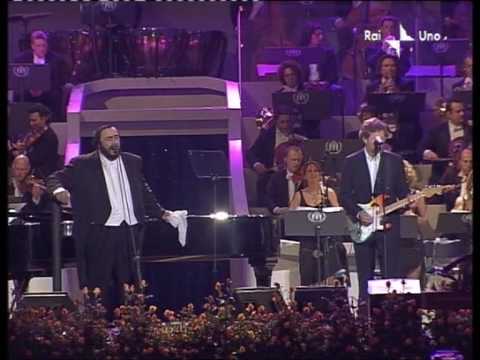
As I had become pregnant with my son in February 2005 (and GHF was was a few months old), YouTube was being founded and another revolution would soon ensue in four to five years when millions of videos and content became downloaded overnight.  Of course, little did I know or even hazard to guess when YouTube came out in February 2005 that I'd have a movie clip of my four-year-old son trying to strum a guitar while watching a YouTube video clip of Luciano Pavarotti and Eric Clapton singing a duet of the song, Holy Mother; the video clip was a recording of the duo which they had performed at a benefit concert in 1996.

With that YouTube video clip (and soon countless others to follow), I witnessed a more accessible, personalized type of learning for my son at home with the internet.  Since my son was born with special needs and was in speech therapy at the time in January 2010, the video clip of Pavarotti and Clapton reached my son in ways that speech therapy could never do.  Music bridged the gap and seemed to work miracles.  My son watched Pavarotti and Clapton intently.  He studied the music, the lyrics, their faces, their body language, their overall demeanor (not to dismiss Clapton's guitar playing!), and everything else it seemed.


At that point in January 2010, my son was four and in a special needs pre-kindergarten program in New York City.  He was not identified as gifted, though he was considered 'bright.'  I had had to enroll him in a special needs pre-kindergarten program after nearly going to court with the New York City Board of Education over his physical therapy, occupational therapy, and speech therapy. Privately, he was receiving vision therapy and feeding therapy (and that's a whole other discussion for another time).

Within a year of my son watching that Pavarotti and Clapton YouTube video clip, though, I had an epiphany.  By then, my son was five years old; we had moved (back) to Massachusetts; we had withdrawn my son from a special needs pre-kindergarten program in a public school and placed him in a private gifted school.  We felt and had 'evidence' of our son being gifted.  We had decided that he needed much more than a special needs pre-kindergarten program could or would ever be able to provide.  At the private gifted school, however, where we had found a slot for my son, the curriculum seemed stuck and suddenly seemed dated to me within a sort time.  The math curriculum consisted of workbooks and rote math facts and drills.  It wasn't too different from the math curriculum that I had experienced as a child over 35+ years ago.

At home my son had been intently watching video clips from PBS's Cyberchase and picking up far more advanced mathematical terms and concepts than what was being covered in the private gifted school.  I knew then that life had fundamentally changed and my son would be part of a groundbreaking generation.  Although Sesame Street was televised soon after I was born and millions had viewed man's first step on the moon, the ability to travel virtually and metaphysically across time and space with digital technology seemed to come at warp speed and was unlike any previous generation had ever experienced as little ones.  Even more staggering, my son's generation's is able to digitally connect with others and not be solely passive recipients to technology.


Today, my 2e son is being un/homeschooled and the educational opportunities seem endless.  Ten years ago, there was no iPod, no iPhone, no iPad, no Facebook, no Minecraft, no Khan, no Ted-Ed or TEDx, no edX, and no World Science U, of course: no nothing it seems now in hindsight! Though my son is an avid, voracious reader, his learning is not restricted to the printed word or a textbook or a set curriculum.  If he likes, he can take a GHF course, watch a BBC documentary, or find out how to make volcanoes with Pinterest.  If he wants to learn how to speak Icelandic or about the history of indigenous Torres Strait Islanders, he can.  He can learn at his own pace and rate.  He can follow his interests.  His learning has become more three-dimensional.  It's more personal and individualized.  At the moment, such learning would be impossible in a public or private school in our neck of the woods.

Such learning also would not have been so easy or effortless ten years ago or without GHF's help. Before I could even to contemplate un/homeschooling my son, I had to google again and find support groups.  I had to hear from other parents, especially mothers, that I wasn't totally crazy.  I needed to hear from another mother that: 1) I could un/homeschool my son and not totally lose my mind and 2) potentially address the special needs more effectively and efficiently by un/homeschooling and didn't necessarily need an army of therapists or teachers/tutors either.

Since I started un/homeschooling three years ago, I've been educating myself on giftedness with GHF's help and have become skilled at my son's giftedness too.  I've found other 2e mothers and gained an amazing amount of knowledge and insight from them.  I've had the comfort of knowing that GHF is there and that there have been others who have been through a similar journey or more like journeys.  I can spot the traits of giftedness and know the many struggles that mothers often face: the identification journey, the public/private school journey, and the social/emotional journey.

If I ever get stuck with finding educational opportunities, needing support, or finding a child like my son, GHF is there.  If I need a grain-free food recipe suggestion, a therapy tip, or a DIY craft or bar of soap, GHF connects me with Pinterest and numerous resources.  If I need to find a professional to consult, GHF provides a social network or a list or a contact.  If I ever need to link a parent's face to their words, GHF's Facebook page is there.  In this respect, GHF is actually improving my life and no doubt the lives of many other people as well.  It's really an exciting time to un/homeschool and be a part of GHF.  Viva la quantum 2e revolutions!

This is part of the Gifted Homeschooling Forum's Tenth Year Anniversary and blog hop Finding Your http://giftedhomeschoolers.org/blog-hops/finding-community/.  For more of GHF's blog hops, see http://giftedhomeschoolers.org/blogs/


Saturday, September 13, 2014

The Strong Willed Child, Limit Testing, and Why Giftedness Matters


The Strong Willed Child, Limit Testing, and Why Giftedness Matters?

When most people hear the word gifted, they often think in terms of academic achievement and high scores on standardized tests or the externally motivated, high achiever, perfectionist.  They don't usually think in terms of the strong willed child or the limit testing that gifted or 2e kids can do.

Not every child who is gifted is strong willed and not every strong willed child is gifted.  However, being strong willed (aka stubborn) is a characteristic of being gifted or 2e.  I'd say it's more a marker than any standardized test.  And, let's face it.  How many strong willed kids are never identified as being gifted or 2e because they, well, don't cooperate, aren't willing to please others, or score high enough on standardized academic achievement tests to be identified as gifted or 2e???   Probably many.  And that's a travesty because these kids have so very much to offer once you figure out what makes them tick and can see the strong willed for what it is:  a gift (one, not always cherished by parents admittedly).

Who are these kids and how do you know you have one?  Why does this combination of being strong willed, limit testing, and giftedness matter so much?  Well, for one, these kids are challenging and are often labelled as __(fill in the blank here with your favorite term or mis/diagnosis) by parents, siblings, schools, doctors, specialists, therapists, and other professionals.  To put it mildly, they're not exactly a barrel of laughs to live with.  The outbursts or tornado explosives can be daily and equivalent to a gale force five.  Handle with care and the warning 'detonative material' would not go amiss.  In a word, these kids are:   INTENSE.

The carrot and stick approach doesn't work here.  Rewards and punishments don't really either.  Forget the behavior chart or much of anything in terms of what works with more compliant children.  The strong willed child may indeed do algebra at home within nanoseconds and without any prompting or input from you, but be the same child who refuses to cooperate with being tested and pretends to barely add or subtract with their fingers with a standardized test.  You don't know if you should laugh, scream, kill the kid, or do all or nothing in the end.

The strong willed child may tell a teacher that they don't need them or anyone else to learn because they simply can do it on their own accord.  They beat to a different drum.  They're intrinsically motivated.  Standard methods of motivating a child do not apply here.  If they're not invested or see the benefits in cleaning their room or brushing their teeth, then they're not motivated to do anything.

Most significantly, the word no does not mean much to these kids.  The word no could mean yes or maybe to them.  It could be misinterpreted with your voice and demeanor.  To them, if you didn't spell out the bottom, repercussions, or consequences then you could say no numerous times to these kids but nothing sinks in or matters.

These kids often learn by doing and/or natural consequences.  Firm limits and action are often better rather than words.  Say what you mean, mean what you say and carry through with action.

And then, there's the questioning.  These kids seem to question everything.  They question your authority and every adult they encounter.  And numerous times per day, every day, every week, every month, every year.  There can be no end to their questioning of authority, of rules.  The police.  Yes, even the police, they question their authority.  Who put them in charge anyway and who made up these stinking rules?  And who would be in their right mind to agree or submit to them?

Put simply, these kids are often regarded as the defiant, rebellious, resistant, noncompliant, nonconformist, oppositional ones.  They do not represent the 90% of kids in public schools who want to please the teacher and comply with what is being asked.  And yet, ask many public school teachers who they would rather have: a complaint, cooperative, bright, high achieving, perfectionist child or a noncompliant, uncooperative, bright, under achieving child.  Many times, they'll say the later because they can see the spark, the potential.

The real differences though, I think, with a gifted child who is strong willed (and this depends on the level of giftedness, of course, and any other factors or special needs), are the levels of persistence, intensity, and amplitude with their behavior.  Nonetheless, these kids are born leaders and original thinkers and not simply followers.  With time, these kids may be more amenable and receptive to being a temporarily, or at least tolerate it, but it's not in their nature, or nurture, to follow.

Some of the greatest minds and talented people were strong willed children once.  And somehow, they lived and survived.  That's not to say it was easy or wasn't World War III at times at home or with un/homeschooling for you.  Can you imagine being the parent/s of Steve Jobs?

There are many books and websites that cover strong willed children.  Pick up one of the latest books, Setting Limits with your Strong-Willed Child by Robert MacKenzie, at your local public library and grin at the references to limit testing being described as data collecting and researching like I did.  If nothing else, you'll see that being strong willed is actually normal and that your child may be within the range of normal too.

This is part of the Gifted Homeschooling Forum's Blog Hop on Why Giftedness Matters? http://giftedhomeschoolers.org/blogs/


Friday, July 4, 2014

What Can Gifted Homeschooling Forum's Groups Do For You?

What Can Gifted Homeschooling Forum's Group Do For You?

About a month ago, Gifted Homeschooling Forum (GHF) came out with groups. Members are able to join.  That's the best darn deal you'll ever find for $24.  Money well worth spent and to a good cause to boot.

Here's some reasons why you should support GHF and try out their groups:

1.  You live in a city and/or state where giftedness isn't mandated.  It can be very challenging to near impossible to find other gifted or 2e kids or parents if you live in such a state, unless your child attends a private school.  Even then, it can be difficult to meet other gifted or 2e kids or parents because everyone seems so busy today.  If you're un/homeschooling, you may find a few gifted or 2e kids around but perhaps you still don't feel your needs or your child's needs are being met?  Then what?  I say that's when you turn to a Gifted Homeschooling Forum group.

2.  You live in a rural or remote area in the US.  Again, this is another very challenging situation where you may face great difficulty finding another gifted or 2e kid/parent.  GHF has groups based on regions for the US.  I live in MA, but have found others who are un/homeschooling with gifted and/or 2e kids in New England.

3.  You live outside the US with a gifted or 2e child.  GHF supports a worldwide audience.  There are groups for all corners of the world.  A GHF group can really help families who live temporarily overseas or permanently reside outside the US.  

4.  You've got a profoundly gifted (pg) child or 2e/pg child.  These kids are, well, rare.  In some places, you're able to find one or two or more around.  In other places, you don't.  Then, your pg or 2e/pg child may be a mathy or a budding astronomer, but it might be impossible to find anyone remotely interested in these topics or subjects like your child is or to the depth and breadth of them.  This is when you scream HELP and join a GHF group.

5.  You've got an early college student or potentially one.  Some states may be more welcoming than others to navigate with early college kids.  On the other hand, it's nice to feel you're not alone in this situation.  There's always someone here who knows the ropes and how to go through the hoops and process with an early college student.  The GHF early college group can help ease your anxieties and give guidance and/or support.

6.  What about the elephant in the room?  Those social-emotional challenges we deal with EVERYDAY.  Let's face it.  Raising a gifted or 2e child isn't always easy.  There are days when you desperately need to connect to that one person who really understands and 'gets' it.  Everyone needs a shoulder to cry on. 

6.  What if you're un/homeschooling a gifted or 2e child who's into sports or you've got curriculum questions or have a gifted or 2e child who's in the awkward middle childhood stage?  There are GHF support groups for you.

8.  What if you don't see any GHF groups that meet your needs?  Easy.  Create one!  Initially, there wasn't a group for the MA/RI or southern New England region.  I created one.  

So why would you join one of these groups and not just post something on Facebook or through the Yahoo Group page?  
a) PRIVACY.   You can send a private message to someone in a group.  Yes, you could do this with Facebook or Yahoo, but these GHF groups are more specific to a region, subject, or topic.  So they're more targeted.   They're perhaps more precise and relevant to your search.
b) They're more manageable and easier to use.
c) They're fun!!!

This post is part of the Gifted Homeschoolers Forum blog hop Gifted Parenting (http://giftedhomeschoolers.org/blog-hops/gifted-parenting/)


Wednesday, May 28, 2014

Ditch the Worksheets, Become a Picasso, a Kindergartener, and a Gifted@play!

Ditch the Worksheets, Become a Picasso, a Kindergartener and a Gifted@Play!

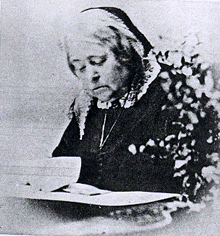
A huge outpouring of research and literature has been coming out on the importance of play and how it is essential to creativity, the arts and science, one's well being, and so forth.  From Richard Louv's (www.richardlouv.com) work on children playing in the woods and getting back in touch with nature to Mihaly Csikszentmihalyi's (http://www.cgu.edu/pages/4751.asp) older (but seminal) work on flow and creativity much ink has been spilled.  Yet even years ago, there were gifted trailblazers like Elizabeth Palmer Peabody who believed in the importance of play in the 19th century and based their life's work on it (my blog post for open source - http://opensource.com/education/13/8/open-education-ideals-peabody).

ps.  in case you're not familiar with her, Elizabeth Palmer Peabody was the sister-in-law of author Nathaniel Hawthorne and educator Horace Mann who often overshadowed her.  She was a gifted child and adult who became an author, bookseller, publisher, educator, a Transcendentalist, and a friend to the Ralph Waldo Emerson and the Alcott family.

Few things make my blood boil than seeing Elizabeth Palmer Peabody's original mission and concept of kindergarten go up in flames with standardized testing and worksheeting children to death.  Today, she must be rolling over in her grave.  Her whole life's calling of bringing Friedrich Frobel's (http://www.froebelweb.org/) original concept of kindergarten (or children's garden) seem gone.  Both Frobel and Peabody advocated that: 1) humans are creative beings and 2) play is the engine of real learning.  Both ideals seem naive and redundant with standardized testing.  And yet, Frobel and Peabody believed that play was not idle behavior but served biological purposes: to discover how things work and to help create meaning from their experiences.  

This might be shocking but Elizabeth Palmer Peabody (http://opensource.com/education/13/8/open-education-ideals-peabody) believed that each child should receive an education appropriate to their innate capabilities.  She believed in the intuitive nature of knowledge and that such knowledge had to be drawn out rather than imposed on children.  These were radical ideas in the 19th and some would continue to find them as radical ideas today.

What is particularly striking when you compare Frobel and Peabody's work on education (as well as the research and literature on the importance to play) and today's emphasis on standardized testing is how far they differ.  Standardized tests are convergent; so are IQ tests.  These involve solving well-defined, rational problems that have one correct answer.  Worksheets and the drill-and-kill approach are examples of convergent thinking.  For divergent thinking, by contrast, think Picasso, The Muppets or old school Sesame Street, the movie Hotel Transylvania, the Captain Underpants or Horrible Histories series, work by Richard Scarry or Roald Dahl - the 'way out there' stuff.


Then again, you might just read Mihaly Csikszentmihalyi's book, Creativity: Flow and the Psychology of Discovery and Invention (1996) (http://www.amazon.com/Creativity-Flow-Psychology-Discovery-Invention/dp/0060928204).  Though it's a bit dated, Csikszentmihalyi conducted a large-scale study on 91 creative individuals who became eminent in their fields including some Nobel Prize winners.  Ravi Shankar, Madeleine L'Engle, Freeman Dyson, Linus Pauling, Jonas Salk, Benjamin Spock, and many others were included in the study.  Many such creative individuals are now dead but they were true innovators and/or highly influential in their domain.

Csikszentmihalyi pioneered the field of creativity and flow and what he found is especially relevant for gifted parents and kids: 

1.  All creative individuals remained childlike for life.  The sense of wonder, the sense of play stayed.  The feeling of awe stayed too.  The intense curiosity never went away, even if one was 90 years old.  Please gifted parents, keep this point in mind!!!

2.  The parents of Ravi Shankar and others did not push their children to study.  The child's spontaneous interest led to the involvement.  IF the parents had pushed or been more directive, it's very likely that the child's interest would have flagged and then evaporated.
3.  Interestingly, school had very little effect.  Many in the study had no memory of a special relationship with a teacher.  Many, too, were not identified as being gifted in school and/or as children.
4.  There is no single way to teach a domain or a subject.  Instead, there are numerous ways to learn.  Intrinsic motivation and rewards were/are key to learning.
5.  New ideas, new discoveries, new ways of thinking, new patterns, new relationships come from mind wandering and doing what you love.  Filling out a worksheet isn't normally something a child loves, but is often busyness and not conducive to creativity.

Csikszentmihalyi looked at creativity across the life span and with gifted kids in his Davidson article (http://www.davidsongifted.org/db/Articles_id_10009.aspx) which parents might consider reading too.

More recently, Sir Ken Robinson (http://sirkenrobinson.com/) supports some of Csikszentmihalyi's ideas on creativity and goes further by saying schools are killing creativity.  He champions a radical rethink on educational systems across the globe to help nurture creativity in the digital age.   He doesn't believe we should keep the status quo or continue worksheeting children to death.  Instead, he values letting a child play, be curious and creative, make discoveries, and find their passion and calling in life.

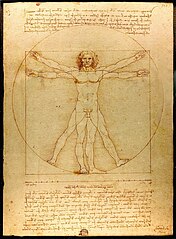
When we think about becoming a Picasso, a Leonardo da Vinci or a gifted@play, we might consider that to be a creative genius you often have to be at the crossroads of the arts and the sciences.  Great art and great science involve a leap of imagination and fantasy with a dose of reality.  You need the openness, passion, and rebelliousness of a mad artist or a Picasso and the playfulness, innocence, energy, and humbleness of a kindergartener.  And you don't need just one idea, you need many.  As Leonardo da Vinci's drawings and work remind us:  the sciences and the arts were not mutually exclusive to Renaissance humanists.  Leonardo's artistic work was as impressive and innovative as his studies in science and engineering.  Today, everyone seems to be leaping on the role and impact of science but neglect the role and impact of the arts in the process.

And yet what drives creative people like Leonardo da Vinci or Robert Ballard to the bottom of the ocean for the RMS Titanic, is curiosity and a burning desire to know.  They are truth seekers.  They want to know.  They want to find the answers to their questions.


Famed paleoanthropologist Maeve Leakey summed it best, "exploration is an obsession.  The more I discover, the more I want to know."  In 1999 Leakey made discovery in Lake Turkana, Kenya that completely changed the understanding of early human ancestry.  With her field and lab work, Maeve Leakey earned an international reputation in paleoanthropology, long a male-dominated speciality.  From an early age, she had been fascinated by animal life, collected insects, and explored tidal pools with the encouragement of her father.  She had planned to study marine zoology, but the 1960s there were no jobs open to women.  Instead, her curiosity was piqued by advertisement in The Times of London by renowned paleoanthropologist Louis Leakey looking for a young zoology graduate to work near him.  She was soon off to East Africa.  How her life would be so different if she didn't stay a kindergartener at heart.

Parents of gifted kids, please take heed.

This is a blog post for Hoagie's Gifted@Play blog hop.